


Quartzite slab movement often surprises homeowners once a kitchen project reaches installation. A slab that looked balanced in the showroom can feel dramatic on the island but calmer along the perimeter. In Dallas homes, this difference shows up often, especially in open kitchens with large islands and strong natural light.
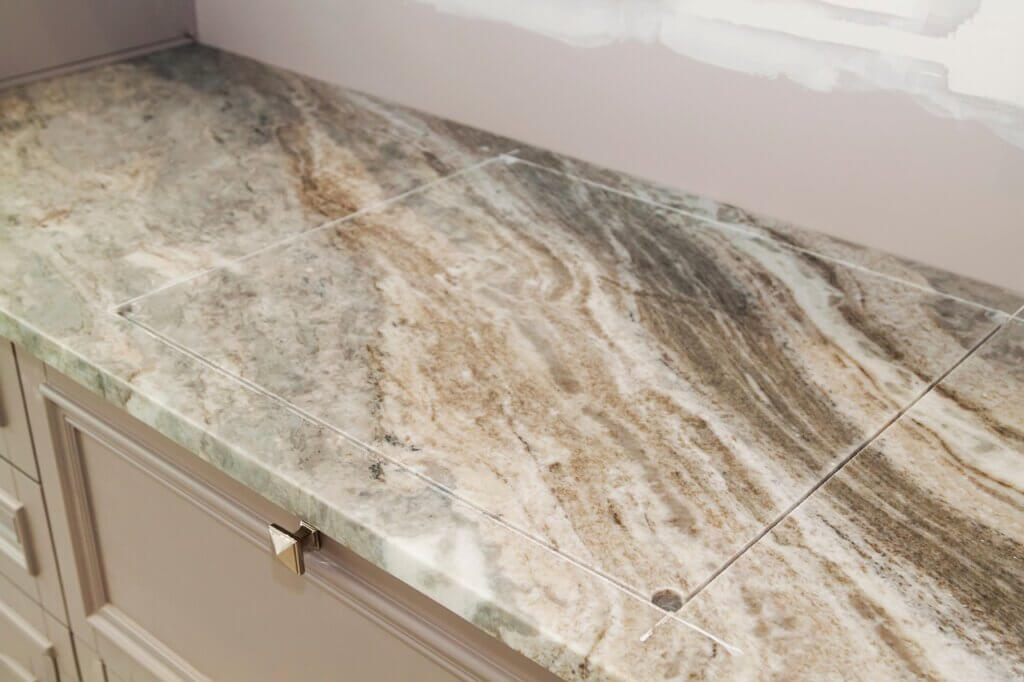
The stone itself does not change. The way the eye reads the stone changes based on placement, scale, lighting, and how the slab gets cut. Understanding why quartzite movement behaves differently on islands versus perimeter counters helps homeowners avoid confusion and make better slab choices from the start.
What movement means in quartzite slabs
Movement describes how color, veining, and mineral patterns flow across a quartzite slab. Some slabs show long sweeping veins. Others display layered textures or cloud like patterns. Even slabs with the same name can vary widely because quartzite forms naturally in the earth.
Movement becomes more noticeable when the slab surface increases or when the stone sits in a focal area. Dallas kitchens often highlight this effect because islands tend to act as the visual center of the room.
Kitchen islands show more slab surface at once
The biggest reason movement looks different on islands comes down to surface area.
Kitchen islands usually feature:
- Larger uninterrupted slab sections
- Fewer visual breaks
- Full slab exposure from multiple sides
Perimeter counters break up the slab with sinks, appliances, backsplashes, and wall cabinets. These interruptions soften how movement appears. The eye processes smaller sections at a time.
On an island, the slab often runs continuously across the top and sometimes down the sides with waterfall edges. That uninterrupted flow allows every vein and color shift to show clearly. In Dallas kitchens with oversized islands, this effect becomes even stronger.
Islands sit in the center of sightlines
Perimeter counters stay anchored to walls. Cabinets frame them. Backsplashes provide visual stops. Islands sit out in the open.
In open concept Dallas homes, islands stay visible from:
- Living rooms
- Dining areas
- Entry points
- Hallways
Quartzite movement on an island remains in view from many angles. Perimeter counters only register when someone stands near them. Because islands command attention, slab movement feels more active even when the stone stays identical.
Natural light hits islands differently than perimeter counters
Lighting changes everything about how quartzite reads. Perimeter counters usually receive filtered light. Upper cabinets and walls block direct sun. Artificial lighting stays consistent.
Islands sit beneath open ceiling space. Sunlight often hits them directly through windows and doors. In Dallas homes, strong afternoon sun highlights mineral layers, increases contrast, and sharpens veining.
As light shifts throughout the day, island slabs reveal:
- More depth
- Brighter highlights
- Stronger contrast
Perimeter counters experience less dramatic light change, so movement appears calmer.
Slab orientation affects islands more than perimeters
Fabricators cut quartzite slabs strategically, but orientation matters more on islands. On perimeter counters, fabricators often rotate or adjust pieces to fit cabinets and appliances. Movement breaks naturally across shorter runs.
Islands typically require long straight cuts. The direction of the veins becomes obvious. If veins run diagonally, they stretch across the island and draw the eye. In Dallas kitchens, long islands emphasize directional movement. Perimeter counters hide it.
Waterfall edges amplify slab movement on islands
Waterfall edges show the slab vertically, not just horizontally. This design choice increases the amount of visible stone. When quartzite features strong movement, waterfalls expose that movement twice. Veins continue from the top down the sides. This effect makes the stone feel bolder.
Perimeter counters rarely include waterfall edges. Cabinets hide slab thickness and side views.
Islands with waterfalls:
- Display more of the slab
- Highlight movement continuity
- Feel visually heavier
This difference alone explains why the same quartzite feels calmer along the walls.
Island scale magnifies pattern repetition
Quartzite patterns repeat naturally across a slab. On smaller surfaces, the repetition goes unnoticed. Large islands showcase repetition clearly. The eye follows the same mineral patterns across several feet. What felt organic in a small section may feel rhythmic across a long span.
In Dallas homes with wide islands, this effect stands out more than homeowners expect. Perimeter counters avoid this because breaks interrupt the pattern.
Cabinet contrast frames perimeter counters differently
Perimeter counters sit between base cabinets and upper cabinets or walls. This framing changes how movement reads. Cabinet colors, textures, and shadows soften stone patterns. They create boundaries that calm the surface visually.
Islands usually feature exposed cabinetry and open sides. The countertop floats visually instead of being framed. Without that frame, quartzite movement on islands appears stronger.
Finishes behave differently on islands
Finish choice plays a role in how movement reads. Polished quartzite reflects light. On islands, reflections change as people move around the space. That motion makes veins stand out more.
Honed or leathered finishes scatter light. They reduce glare and soften contrast. Perimeter counters benefit from shadow and cabinet framing even with polished finishes. Islands do not.
Dallas homeowners who choose polished slabs often notice more movement on islands than expected.
How Dallas kitchen layouts exaggerate island movement
Dallas kitchens often feature:
- Open floor plans
- Tall ceilings
- Large windows
- Minimal walls
These design trends put islands front and center. Quartzite movement becomes part of the room’s identity. Perimeter counters fade into the background by comparison. This contrast does not mean the slab selection was wrong. It means placement changed perception.
Choosing quartzite with island placement in mind
Smart slab selection accounts for where the stone will live. If the island will act as the focal point, choose movement intentionally. Some homeowners want bold patterns on islands and calmer slabs on perimeters. Others prefer consistency across the kitchen.
Helpful tips include:
- Viewing full slabs from a distance
- Standing back and imagining the island size
- Asking to see the slab laid flat
- Not relying only on small samples
Understanding slab behavior prevents surprises after installation.
When different movement becomes an advantage
Many Dallas homeowners end up loving the contrast. A dramatic island paired with calmer perimeter counters adds depth and interest. Quartzite allows for this flexibility because no two slabs behave exactly the same. When expectations align with reality, the result feels intentional rather than chaotic.
Why this difference matters before fabrication
Once slabs get cut, movement placement becomes permanent. Fabricators work with what the slab provides, but homeowners influence outcomes by choosing the right slab early. Seeing slabs in person and understanding how islands magnify movement avoids regret later.
Frequently Asked Questions
Why does quartzite movement look stronger on kitchen islands
Islands expose more slab surface, receive more light, and sit in open sightlines, which highlights movement.
Do perimeter counters always look calmer
Usually yes, because cabinets, walls, and appliances break up the slab visually.
Does island size affect how busy quartzite looks
Yes. Larger islands show more pattern repetition and directional veining.
Do waterfall edges make quartzite look busier
They can, because they expose more of the slab and continue movement vertically.
Should I choose different slabs for islands and perimeters
Some homeowners do. It depends on whether you want contrast or consistency.
To see full quartzite slabs and understand how movement will appear on both kitchen islands and perimeter counters, visit Verona Marble and coordinate your selection with your fabricator. Call (214) 381-8405 to plan your visit.


