


For over 30 years, Verona Marble Company has been a cornerstone of the stone industry, guiding homeowners, designers, and contractors through the labyrinth of surface selection. One of the most common points of confusion we encounter in our showrooms involves two materials that sound nearly identical but couldn’t be more different: Natural Quartzite and Quartz.
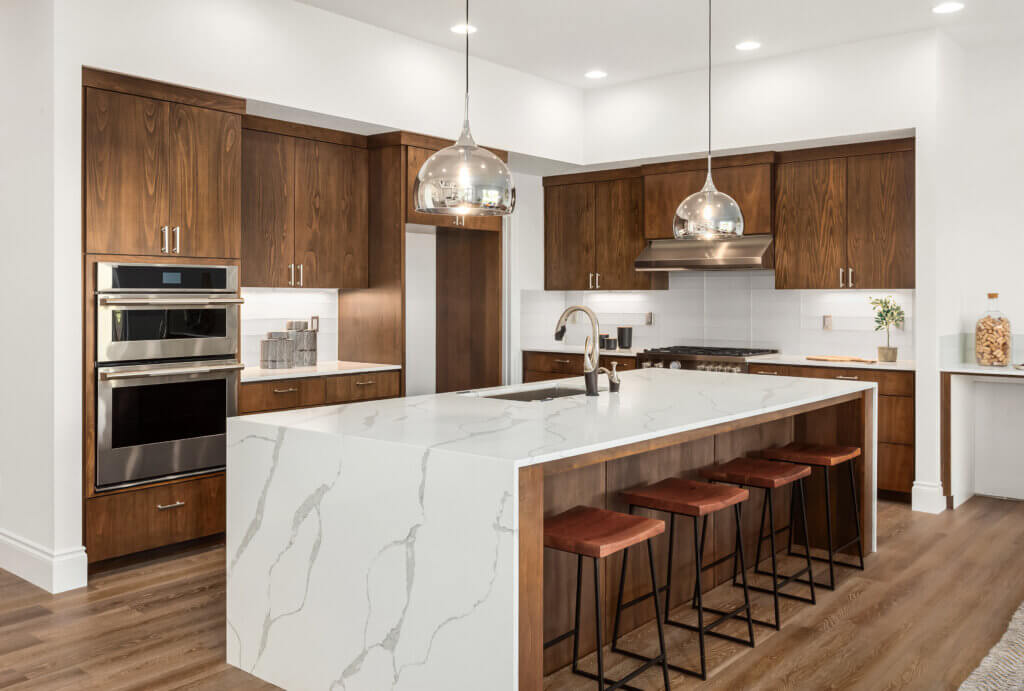
If you’ve found yourself asking, “Is quartzite a natural stone?” or “What is the difference between quartzite and quartz?” you aren’t alone. Understanding the nuances of quartzite natural stone is essential for ensuring your renovation meets both your aesthetic dreams and your lifestyle’s durability demands.
Defining the Material: Is Quartzite a Natural Stone?
Let’s clear the air immediately: Yes, quartzite is a 100% natural stone. While “Quartz” (the engineered surface) is a man-made product composed of crushed stone and resin binders, natural quartzite is a metamorphic rock. It begins its life as sandstone, rich in quartz grains. Over millions of years, intense heat and tectonic pressure within the Earth’s crust cause those grains to recrystallize, fusing them into a solid, incredibly hard structure.
At Verona Marble Company, we source our quartzite from the finest quarries worldwide. Because it is forged by nature, every slab is a unique piece of art no two blocks share the exact same veining or mineral deposits.
The Geology of Quartzite
To understand why quartzite stone is so prized, you have to look at its “recipe.” The metamorphic process it undergoes makes it one of the hardest materials available for home use. On the Mohs Scale of Mineral Hardness, quartzite typically ranks around a 7 making it harder than granite (which sits at a 6) and significantly harder than glass or steel.
Quartzite vs. Quartz: The Great Confusion
The names are similar, which is the primary source of the “Quartzite vs. Quartz” mix-up. Here is a quick breakdown to help you distinguish between the two:
| Feature | Natural Quartzite | Engineered Quartz |
| Origin | 100% Natural Metamorphic Rock | Man-made (90% stone, 10% resin/pigment) |
| Appearance | Organic, flowing veins; “Marble-look” | Consistent patterns; mimics stone |
| Heat Resistance | High (handles hot pots well) | Low (resins can melt or scorch) |
| Maintenance | Requires periodic sealing | No sealing required |
| UV Resistance | Excellent (won’t fade in sun) | Limited (can yellow over time) |
Why Choose Natural Quartzite for Your Home?
Homeowners often gravitate toward quartzite natural stone because it offers the “Holy Grail” of interior design: the ethereal, sophisticated look of marble with the rugged durability of granite.
1. The Aesthetic of Luxury
If you love the soft grays, whites, and dramatic “movement” of marble but worry about its tendency to etch and scratch, quartzite is your solution. Many varieties, such as Taj Mahal or White Macaubas, provide that high-end, timeless elegance that elevates a kitchen or bathroom from standard to spectacular.
2. Unmatched Durability
Because it is so dense, quartzite is highly resistant to scratching. You could technically cut a vegetable directly on a quartzite countertop and it would likely dull your knife before you scratched the stone (though we still recommend a cutting board!). This resilience makes it a “legacy material” , a surface that will look just as good 20 years from now as it does the day it’s installed.
3. Heat Resilience
Unlike engineered quartz, which uses plastic-based resins that can be damaged by a hot pan, natural quartzite is born in fire. It handles high temperatures with ease, making it a favorite for busy family kitchens where “accidents” happen.
4. Versatility in Application
At Verona Marble Company, we don’t just see quartzite on countertops. Because of its strength, it is an excellent choice for:
- High-traffic flooring
- Feature walls and backsplashes
- Fireplace surrounds
- Outdoor kitchens (as it is UV-resistant and won’t fade in the sun)
The “Acid Test”: Identifying True Quartzite
Because quartzite is a premium material, it is sometimes mislabeled in the broader market. Some “soft quartzites” are actually dolomitic marbles. To ensure you are getting a true quartzite natural stone, professionals use two main indicators:
- The Scratch Test: A true quartzite will easily scratch a piece of glass. If the stone “crumbles” or fails to mark the glass, it may be a softer marble or limestone.
- The Lemon Test: Unlike marble, true quartzite does not react with acids. If you drop lemon juice or vinegar on the surface and it “etches” (creates a dull spot), the stone contains calcite, meaning it isn’t pure quartzite.
When you work with Verona Marble Company, you can rest easy knowing our inventory is vetted for geological accuracy. We take pride in the integrity of our materials.
Caring for Your Quartzite Stone
While quartzite is incredibly tough, it is still a natural stone, which means it has some porosity. Here is how you keep it looking pristine:
Sealing
Like granite, quartzite should be sealed upon installation and periodically thereafter (usually once every 1–2 years depending on use). This creates a barrier that prevents liquids like red wine or oils from seeping into the stone’s pores.
Daily Cleaning
Forget the harsh chemicals. All you need for quartzite is warm water, a soft cloth, and a pH-neutral stone cleaner. Avoid abrasive scouring pads, which can dull the natural polish of the stone over time.
Preventing Stains
Even with a sealer, it is always best practice to wipe up spills, especially acidic ones like wine, citrus, or tomato sauce as soon as they occur.
Exploring the Verona Marble Company Difference
Choosing the right stone is a massive decision. It’s an investment in your property’s value and your daily enjoyment of your home. At Verona Marble Company (VMC), we act as more than just a warehouse; we are your partners in design.
Our Selection
Beyond our stunning natural quartzites, we offer a massive inventory of:
- Natural Granite: For those seeking classic, “bulletproof” resilience.
- Natural Marble: For the purist who loves the patina of history.
- SM Quartz & SM Marble: Our engineered selections from Santamargherita for modern, low-maintenance living.
- Lapitec: Cutting-edge sintered stone for those on the forefront of architectural design.
Expert Guidance
The process of choosing a slab can be overwhelming. Our team guides you through our warehouse, helping you understand the mineralogy, the maintenance, and the “personality” of each stone. We bridge the gap between your vision and the final installation by helping you find the perfect fabricator to bring your project to life.
Frequently Asked Questions About Quartzite
Q: Is quartzite more expensive than granite?
A: Generally, yes. Because quartzite is significantly harder than granite, it requires specialized diamond-tipped tools and more time to cut and polish. These increased labor costs, combined with the rarity of certain high-end patterns, typically make it a more premium investment than standard granite.
Q: Can I use quartzite outdoors?
A: Absolutely. Unlike man-made quartz, which contains resins that can yellow or “scorch” under UV exposure, quartzite is a natural earth product. It handles direct sunlight and temperature fluctuations beautifully, making it an ideal choice for luxury outdoor kitchens and pool surrounds.
Q: Does quartzite stain easily?
A: Quartzite is less porous than marble, but it is not entirely “stain-proof.” Its resistance depends largely on the density of the specific slab. As long as the stone is properly sealed and you wipe up spills like red wine or oil in a timely manner, it is highly resistant to permanent staining.
Q: Why do some people call it “Soft Quartzite”?
A: Geologically, there is no such thing as “soft” quartzite. This term is often a misnomer used in the industry for stones that look like quartzite but contain high levels of calcite (the mineral found in marble). At Verona Marble Company, we help you identify the true geological properties of your slab to ensure it meets your durability needs.
Q: What finishes are available for quartzite slabs?
A: Quartzite is incredibly versatile and can be finished in several ways to change the “feel” of a room. Polished finishes are the most popular, offering a high-shine, mirror-like surface that makes colors pop. Honed finishes provide a smooth, matte look that is excellent for hiding fingerprints, while Leathered finishes offer a textured, tactile feel that highlights the stone’s natural topography.
Explore Premium Quartzite & Natural Stone with Verona Marble Company
If you’re planning a project and want expert guidance on quartzite, marble, granite, or engineered stone options, our team is here to help. Verona Marble Company (214) 381-8405
We offer one of the largest selections of premium natural and engineered stone slabs in North America, helping homeowners, designers, and contractors bring their vision to life with confidence and quality.


