


Quartzite is a natural metamorphic stone formed when sandstone undergoes extreme heat and pressure over millions of years. This transformation creates an incredibly hard and durable material that is often compared to granite in strength while offering the elegant look of marble. However, not all quartzite is identical. Some slabs in the market may contain varying mineral compositions that behave differently when exposed to liquids. This variation is important because it directly affects how resistant the stone is to staining in real-world conditions.
Does Quartzite Stain Easily in Real Home Conditions
Quartzite does not stain easily in everyday use, but it is not completely stain-proof. When properly sealed and maintained, it performs well against common household spills such as water, juice, and most cooking-related liquids. However, if liquids are left sitting for long periods or if the stone is not adequately sealed, absorption can occur. In practical terms, quartzite should be considered stain-resistant rather than stain-proof, which makes proper care and maintenance an important part of ownership.
What Causes Quartzite Staining in Kitchens and Bathrooms
Staining typically occurs when liquids penetrate the microscopic pores within the stone. Oil-based substances are one of the most common causes because they can seep in and leave behind dark marks that are difficult to remove. Strongly pigmented liquids like coffee, wine, and tea can also cause discoloration if not cleaned promptly. Additionally, hard water or mineral buildup from repeated exposure can leave visible marks over time, especially in high-use areas such as kitchens and bathrooms where moisture exposure is frequent.
Is Quartzite Stain Resistant Compared to Other Natural Stones
Quartzite is widely considered one of the most stain-resistant natural stones available for residential countertops. It performs significantly better than softer materials such as marble and limestone due to its dense crystalline structure. However, unlike engineered quartz surfaces, quartzite still has natural porosity, meaning it can absorb liquids under certain conditions. This makes it a strong balance between beauty and performance for homeowners who want a natural stone with practical durability.
How Sealing Impacts Quartzite Stain Protection
Sealing plays a crucial role in protecting quartzite from stains. A quality stone sealer works by filling microscopic pores and slowing down liquid absorption, giving homeowners more time to clean spills before they penetrate the surface. Most quartzite countertops are sealed during installation, but this protection gradually wears down depending on usage, cleaning habits, and exposure. Regular resealing helps maintain optimal protection and extends the life and appearance of the stone.
Which Quartzite Colors Show or Hide Stains More
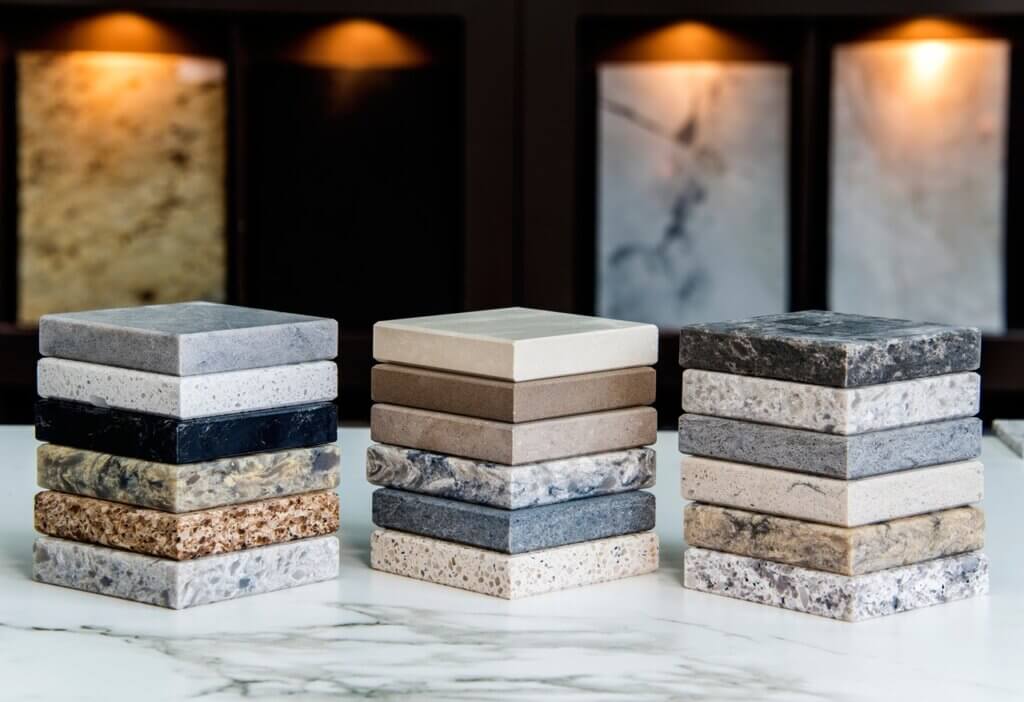
While quartzite color does not change its absorption rate, it does affect how visible stains appear. Lighter quartzite tends to show dark spills and oil marks more clearly, which makes cleanliness more noticeable. Darker quartzite can help hide minor stains but may show water spots or residue under certain lighting conditions. Slabs with natural veining or movement often help disguise everyday wear, making them a popular choice for active kitchens.
How Daily Habits Affect Quartzite Stain Resistance
Daily habits play a major role in how quartzite performs over time. Promptly cleaning spills, especially oils and acidic liquids, significantly reduces the risk of staining. Using cutting boards, coasters, and trays helps protect the surface from direct exposure to staining agents. Gentle cleaning with mild soap and water is typically sufficient for maintenance, while harsh chemicals should be avoided as they can weaken the sealant over time.
Quartzite vs Quartz When It Comes to Staining
Quartzite and quartz are often confused but are very different materials. Quartzite is a natural stone that requires sealing and can absorb liquids if not properly maintained. Quartz, on the other hand, is an engineered material that is non-porous and highly resistant to staining. While quartz offers lower maintenance, quartzite is preferred by many homeowners for its natural beauty, unique veining, and superior heat resistance, making it ideal for high-end kitchen designs.
Can Quartzite Stains Be Removed if They Occur
In many cases, quartzite stains can be treated depending on their severity. Surface stains caused by oils or organic materials can often be removed using a poultice treatment that draws the stain out of the stone. More stubborn or older stains may require specialized stone cleaners or professional restoration services. Acting quickly is always the best approach, as fresh stains are significantly easier to remove than those that have set over time.
Quartzite is not completely immune to staining, but it is a highly durable and reliable natural stone when properly sealed and maintained. It offers an excellent combination of strength, elegance, and everyday usability, making it a popular choice for kitchen and bathroom countertops. While it requires some maintenance, its long-term performance and natural beauty make it a worthwhile investment for many homeowners.
FAQs About Quartzite Staining
Does quartzite stain easily?
No, quartzite does not stain easily when properly sealed and maintained. However, it is still a natural stone and can absorb liquids if spills are left untreated.
Is quartzite stain resistant?
Yes, quartzite is highly stain resistant compared to many natural stones, especially marble and limestone, but it is not completely stain-proof.
What stains quartzite countertops?
Oil, wine, coffee, and other pigmented or acidic liquids are the most common causes of staining if they are not cleaned quickly.
Can quartzite stains be removed?
Yes, many stains can be removed using stone-safe cleaning methods or professional restoration, depending on severity and type.
Does quartzite need to be sealed?
Yes, sealing is recommended to help protect quartzite from absorbing liquids and developing stains over time.If you’re considering quartzite countertops for your home and want expert guidance before making a decision, visit Verona Marble Company. Our team can help you compare slabs in person, understand performance differences, and choose the right stone for your kitchen or bathroom project.
Call us today at (214) 381-8405 to schedule your visit or get personalized assistance from our stone experts.


